
AGV K1 vs K3: AGV's Entry-Level Helmets Explained
Published 30 July 2026
AGV's cheapest helmets are also its most confusingly named. K1 and K3 are the same tier, sold side by side, and each then comes in a plain version and an 'S' version that most buyers assume is just a colour or trim change. It isn't.
Here's what actually separates them, checked against SHARP (sharp.dft.gov.uk), the Department for Transport's Safety Helmet Assessment and Rating Programme. SHARP retests helmets at higher impact loads than the legal minimum requires and publishes a plain 1 to 5 star score, independent of any brand's own marketing. Star ratings, weight and shell data below are published there under the Open Government Licence.
K1 and K3 are the same tier
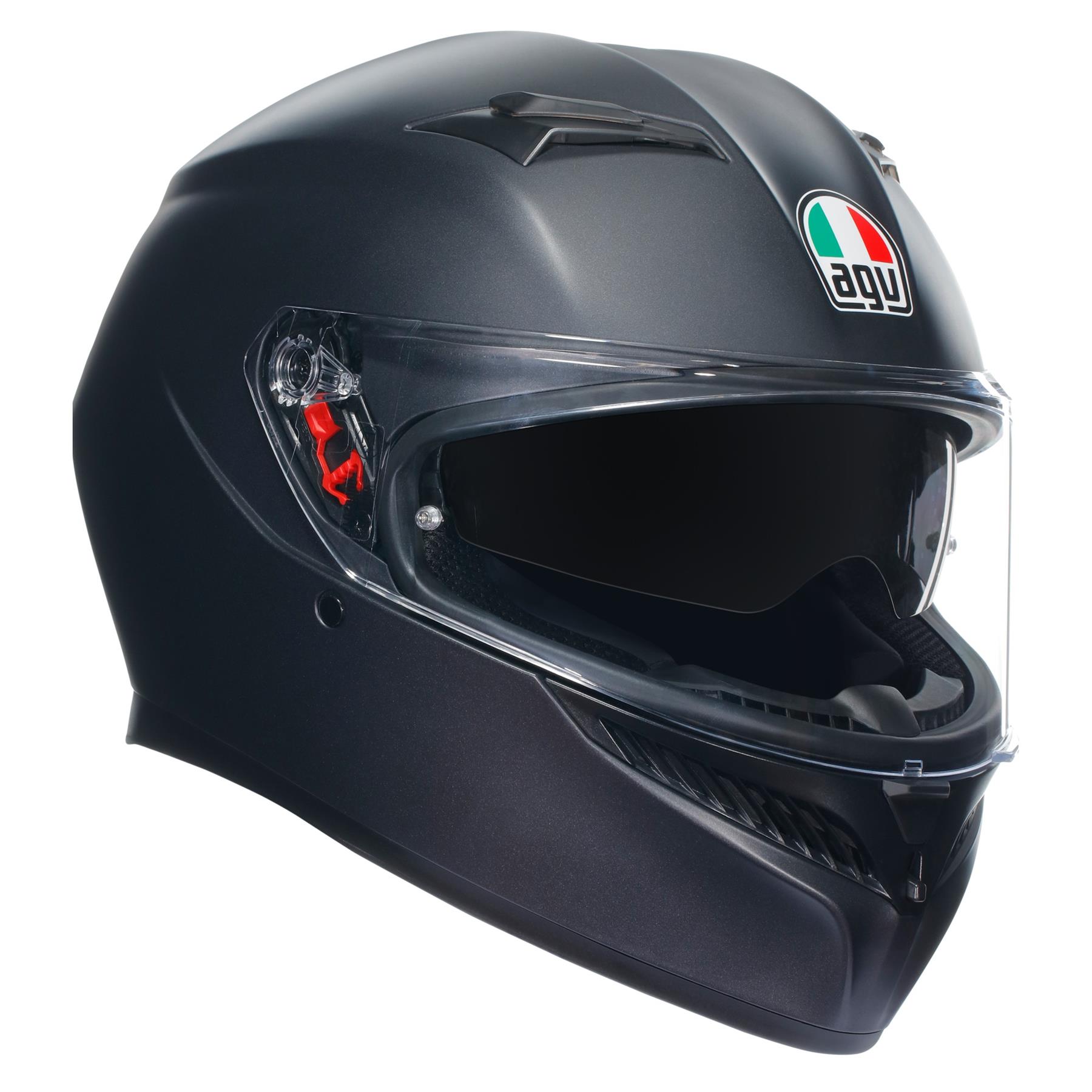
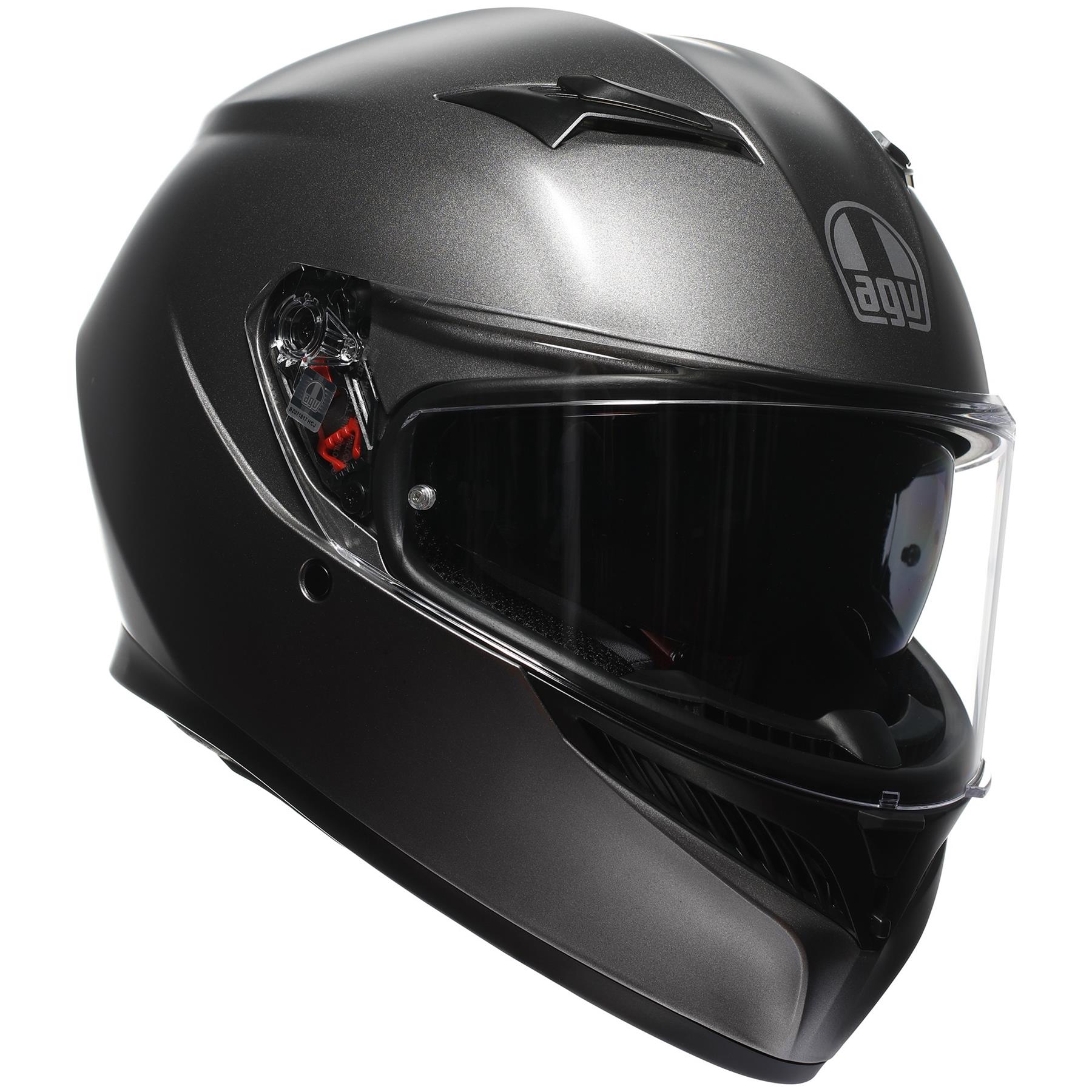
AGV's numbering makes more sense once you realise K1 and K3 are the same tier: two versions of AGV's entry-level, thermoplastic-shelled helmet sold alongside each other, with K3 aimed at a slightly sportier look and price than K1.
The 'S' is the ECE 22.06 retest, not a trim

The jump from the original K1 to the K1-S is the single biggest swing in this whole lineup. SHARP scores the original K1 (listed on SHARP simply as the AGV 'K Series') at 3 stars, and the K1-S at 5 stars, on what is largely the same shell with an updated liner and the newer homologation. It is the clearest evidence anywhere in AGV's own range that ECE 22.06 is not just a paperwork exercise. K3 follows a similar pattern in miniature: the original K3 scores 4 stars, and K3 SV also scores 4 on the same rating, adding an integrated drop-down internal sun visor rather than changing the shell or lifting the score.
Fit: K1-S runs true oval, K3 SV suits a rounder head
AGV's own sizing treats K1 and K1-S as an intermediate oval fit, the shape most riders have, and reviewers generally confirm it: a snug, consistent fit out of the box with reasonable effort getting the helmet on and off. K3 SV is built around a rounder profile, and reviewers specifically flag it as suited to round or more oval head shapes, with generous soft padding that avoids pressure points for riders that fit is aimed at. If you already know you're a round-oval fit, K3 SV is worth trying first; if you're an intermediate oval like most riders, K1-S is the safer starting point.
Noise and Pinlock: the running costs the spec sheet skips
Neither of these is a quiet helmet by flagship standards, and it's worth setting expectations before you buy at this price point. K1-S measures around 102dB in independent testing, one of the quieter helmets at its price, but reviewers are clear it isn't whisper-quiet, and the plain K1 is a touch louder again. K3 SV gets more mixed reports: some owners find it noticeably loud above around 50mph, though testers rate its noise deflection well for the price and note no whistling or humming from the vents specifically, so a lot of what you hear is wind rather than a helmet defect.
The Pinlock situation is also worth knowing before you order. K1 and K1-S are sold Pinlock-ready but without the anti-fog insert in the box, budget roughly £25-£30 extra for it. K3 SV includes the Pinlock insert as standard, which is effectively baked into the small price premium over the plain K3 and worth factoring in if you were about to write it off as just a visor upgrade.
Shell material: what 'thermoplastic' actually means here
The table below lists K1 on a polycarbonate shell and the other three on 'thermoplastic' as if they're two different materials, and it's worth being precise about what that means. Polycarbonate is itself a type of thermoplastic, so this isn't composite fibre versus thermoplastic, it's one specific thermoplastic (polycarbonate) versus AGV's own blended thermoplastic resin used on the newer shells. Thermoplastic shells generally cost less to produce than composite fibre, and their main safety mechanism is controlled flex on impact rather than the stiff, thin shell a composite layup allows, which is why thermoplastic helmets tend to be moulded thicker and heavier for the same protection level.
That's consistent with what SHARP actually measured here: K1's plain polycarbonate shell scores lower (3 stars) than the newer thermoplastic blend on K1-S, K3 and K3 SV (4 to 5 stars), on broadly similar weights. The material label change on the spec sheet reflects a real formulation update, not just marketing wording, and it lines up with the same star-rating jump the 22.06 retest already showed.
Which one to actually buy

For a first helmet or a budget commuter, this pair is where AGV puts its cheapest ECE 22.06 options. K1-S stands out here: its 5-star SHARP score matches helmets costing two or three times as much, and there is little reason to choose the plain K1 or K3 over it unless the exact one you want happens to be on offer, you specifically prefer a rounder-fitting shell, or you'd rather have the Pinlock insert included from the start.
One caveat on that star score: SHARP isn't beyond criticism. A 2009 University of Birmingham study by Nigel Mills argued its rotational-impact test rests on a flawed mechanics model, and manufacturers like Arai have long favoured SNELL's separate test regime over SHARP's for exactly that reason. None of this K1/K3 lineup carries a second certification like SNELL, so SHARP is the only independent safety check available for it, still a strong, government-run data point, just not the whole picture. If you want more than the headline number, SHARP's own page for each model (sharp.dft.gov.uk) breaks the star down zone by zone rather than giving you one figure to take on faith.
| Model | SHARP rating | Weight | Shell | Fastening |
|---|---|---|---|---|
| AGV K Series (K1) | 3 stars | 1.35kg | Polycarbonate | Quick Release |
| AGV K1-S | 5 stars | 1.5kg | Thermoplastic | D-Ring |
| AGV K-3 | 4 stars | 1.46kg | Thermoplastic | Micrometric |
| AGV K3 SV | 4 stars | 1.49kg | Thermoplastic | Micrometric |




Frequently asked questions
Is SHARP's star rating the final word on helmet safety?
No, and it's worth knowing why. A 2009 University of Birmingham study by Nigel Mills argued SHARP's rotational-impact test rests on a flawed mechanics model, and manufacturers like Arai have long favoured SNELL's own test regime over SHARP's, partly because the two weight impact zones differently. None of this K1/K3 lineup carries a second certification like SNELL, so SHARP is the only independent check available for it, still a strong, government-run data point, just not the whole picture. Check SHARP's own per-model page (sharp.dft.gov.uk) for the zone-by-zone breakdown behind the headline star if you want more than one number to go on.
What does 'SV' actually mean on the AGV K3?
SV stands for the integrated drop-down internal sun visor that K3 SV adds over the plain K3: a tinted shield you flip down over your eyes with a lever, separate from the clear main visor, useful riding into low sun without having to swap or fit tinted goggles. The chin-strap fastener stays the same micrometric buckle on both K3 and K3 SV. The shell and SHARP score do not change between them either, so the SV badge is really about a genuinely useful extra feature and day-to-day convenience, not outright protection. You may also see K3 SV-S listings: that's the same helmet with an added rear spoiler for looks and high-speed stability, nothing to do with safety rating.
Is the AGV K1-S a genuinely good first helmet?
Yes, on the evidence. It's SHARP-rated at 5 stars, the same as helmets costing several times more, on a thermoplastic shell that keeps the price down. For a first bike or a budget commuter it's hard to argue against, unless you specifically want a lighter composite shell or extra features the price tier doesn't include.
Why does AGV keep a plain and an 'S' version of the same helmet?
In AGV's range, the S versions (K1-S, K3 SV) are usually the retested, ECE 22.06 version of an existing shell, sometimes with a visor or liner update alongside. It lets AGV keep selling an established shell while bringing it up to the newer standard, rather than redesigning the whole helmet. The lesson either way: check the specific model's own certification and SHARP score rather than assuming a helmet's reputation carries over unchanged to its next revision.
Does the AGV K1 come with a Pinlock insert in the box?
No, K1 and K1-S are sold Pinlock-ready, meaning the visor has the pins for one, but the anti-fog insert itself is a separate purchase, typically around £25-£30. K3 SV is the one in this pair that includes the insert as standard, which is worth weighing against K1-S's higher SHARP score when you're comparing the two on total cost.
Do I need to replace an ECE 22.05 helmet with an ECE 22.06 one?
No. A helmet approved to ECE 22.05 remains legal to wear and to sell, and the two standards coexist rather than one replacing the other overnight. ECE 22.06 tests a wider range of impact zones and speeds and is worth looking for when buying new, but an existing 22.05 helmet does not need replacing purely because a newer standard exists.
When you know what you want, MotoMiser compares live prices on the same gear across UK retailers, so you can see who has the best deal before you spend.
More from the Blog
- Direct Access Explained: The Fast Route To A Full Bike Licence →
- Your CBT: The Rules, The Kit, and What Gets People Turned Away →
- Arai Quantic vs RX-7V Evo: Which Flagship Should You Buy? →
- AGV K5 vs K6 vs K7: How AGV's Top Road Helmet Evolved →
- Men's Motorcycle Riding Gear: What You Actually Need →
- Women's Motorcycle Gear: Fit Is a Safety Issue →
- Kids' Motorcycle Gear: Don't Buy Big to Grow Into →
- Motorcycle gear buying guides →